Science & Nature
Dark Matter's Last Stand
New Experiments Challenge Our Understanding of the Universe
James Whitfield·14 min read·March 15, 2026

The Science Behind the Nightly Theater of the Sleeping Mind
Every night, as your body lies still, your brain stages an elaborate private cinema — conjuring faces, landscapes, and emotions from nothing. After a century of research, scientists are finally beginning to decode what dreams are actually for, and the answers are stranger and more profound than anyone expected.
CRISPR-Cas9 has transformed biology in less than a decade, enabling scientists to edit genomes with unprecedented precision. But the technology's implications extend far beyond treating genetic diseases — it is poised to transform agriculture, resurrect extinct species, and raise profound questions about the boundaries of human intervention in nature.

Since the Industrial Revolution, the world's oceans have absorbed roughly a third of all human carbon dioxide emissions. The chemical consequence — ocean acidification — is transforming marine chemistry at a rate not seen in at least 300 million years, threatening the calcified shells and skeletons that underpin entire ecosystems.
The human body harbors approximately 38 trillion microbial cells — roughly equal to the number of human cells. This vast community of bacteria, viruses, fungi, and archaea, collectively known as the microbiome, influences everything from digestion and immunity to mood and cognition. Understanding it may be the key to treating diseases that have long resisted conventional medicine.

After decades of theoretical promise and incremental progress, quantum computing is approaching a critical threshold. The first practical quantum advantage over classical computers is within reach, with profound implications for cryptography, drug discovery, and materials science.

Large language models can write poetry, pass bar exams, and explain quantum mechanics. But do they actually understand what they are saying? A growing body of research suggests that LLMs are extraordinarily sophisticated pattern matchers — but that genuine reasoning may require something fundamentally different.

Neuralink's first human implant, BrainGate's communication systems for paralyzed patients, and non-invasive EEG-based interfaces are converging on a future in which the boundary between human cognition and digital computation becomes increasingly blurred. The medical applications are compelling; the philosophical implications are profound.

Despite living in the most connected era in human history, rates of loneliness and social isolation have reached epidemic proportions across the developed world. Understanding this paradox requires examining the difference between connection and genuine community.

Cities are both major contributors to climate change and its most vulnerable victims. But they are also the sites of the most innovative responses to the crisis, from green infrastructure to circular economy initiatives to radical experiments in urban governance.

Despite living in an era of unprecedented connectivity, loneliness has reached epidemic proportions. The US Surgeon General has declared it a public health crisis. Research shows that chronic loneliness is as harmful to health as smoking 15 cigarettes a day. Understanding why we are so lonely — and what to do about it — is one of the most urgent challenges of our time.
"Knowledge is not a destination. It is a continuous act of discovery."
kupn.org
Rigorous sourcing from peer-reviewed research
Expert contributors across 7 disciplines
In-depth analysis, not surface-level summaries
The trillions of microorganisms living in your digestive system do far more than help you digest food. Emerging research reveals that the gut microbiome communicates directly with the brain, influencing mood, cognition, and the risk of psychiatric disorders.

Sleep is not a passive state of unconsciousness but an active, highly organized process essential for memory consolidation, emotional regulation, metabolic health, and the clearance of neurotoxic waste. Understanding sleep's architecture reveals why its disruption has such profound consequences.
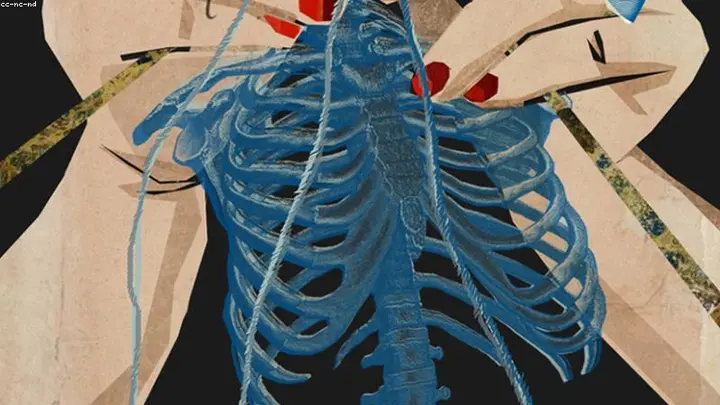
The gut microbiome — the community of trillions of bacteria, viruses, and fungi that live in your digestive tract — communicates directly with your brain through the vagus nerve, immune system, and hormonal pathways. Research is revealing that this gut-brain axis plays a profound role in mental health, with implications for the treatment of depression, anxiety, and autism.

Why does physical processing in the brain give rise to subjective experience? This question — the "hard problem" of consciousness — remains one of the deepest unsolved problems in science and philosophy, with implications for our understanding of mind, identity, and the nature of reality.
The neuroscience of decision-making suggests that our conscious choices may be the result of unconscious brain processes that precede our awareness of them. If true, this would undermine the concept of free will that underlies our moral, legal, and social systems. But the debate is far from settled.
The question of what makes life meaningful has occupied philosophers for millennia. In an age of declining religious belief, rising material prosperity, and persistent existential anxiety, the question has become more urgent. Recent philosophical and psychological research is offering new perspectives on an ancient problem.

Global inequality has reached levels not seen since the Gilded Age. Understanding the forces driving this divergence — technological change, globalization, financialization, and the erosion of labor power — is essential for designing effective responses.

Wealth inequality in the United States has returned to levels not seen since the 1920s. The top 1% now owns more wealth than the bottom 90% combined. Understanding how this happened — and what it means for democracy, opportunity, and social cohesion — is one of the most important challenges of our time.
Economists have long argued that putting a price on carbon emissions is the most efficient way to reduce greenhouse gas emissions. Carbon pricing creates incentives for businesses and consumers to reduce emissions without mandating specific technologies. Yet carbon pricing has been politically difficult to implement, and where it has been implemented, the prices are often too low to drive the necessary reductions.

What happens in the brain when we encounter a piece of music that makes us shiver, or a painting that stops us in our tracks? Neuroaesthetics is beginning to reveal the neural architecture of aesthetic experience, with surprising implications for our understanding of art, emotion, and human nature.

Of the approximately 7,000 languages spoken today, more than half are expected to disappear by the end of this century. With each language that dies, humanity loses a unique way of understanding the world — and a repository of knowledge accumulated over thousands of years.

AI systems like DALL-E, Midjourney, and Stable Diffusion can now generate images that are indistinguishable from human-made art. The technology raises profound questions about the nature of creativity, the value of human artistic labor, and the future of the art world.
Curated links to the world's leading research institutions, journals, and organizations
